

Guide
Promotional Products Made from Organic Cotton, Recycled Materials & More: A Guide for Companies
How to choose promotional products that strengthen your brand – by material, certification, packaging and shipping.

Promotional products are a tangible element of brand communication, but their impact is increasingly judged by their quality, utility, and origin. In today's market, low-cost, disposable items can actively detract from a brand's image. Conversely, thoughtfully selected promotional products, chosen for their durability and responsible sourcing, convey a message of value and foresight. This guide provides a factual framework for companies looking to align their merchandising strategy with concrete operational standards, creating positive and lasting connections with customers, partners, and employees.
The Strategic Value of Responsibly Sourced Promotional Products
Moving beyond trends, the decision to use promotional items made from materials like organic cotton or recycled plastics is a strategic one. The primary benefit is longevity. A high-quality, useful item—such as a sturdy tote bag, an insulated water bottle, or a well-made notebook—remains in use for months or years, generating significantly more brand impressions than a disposable alternative. This extended lifecycle offers a greater return on investment and keeps your brand visible in a positive context.
Furthermore, the choice of merchandise reflects corporate values. For employees, receiving company-branded gear that is verifiably well-made and sourced through transparent supply chains can foster a stronger sense of pride and alignment with the company's mission. For clients and business partners, it demonstrates a commitment to quality and diligence that extends beyond your core products or services. It is a tangible signal that your organisation prioritises diligence in all its operations, including marketing.
Key Considerations for Material Selection
The material composition of a product is the foundation of its impact. Focusing on certified and recycled materials provides a clear and verifiable basis for your merchandising choices. This is not about abstract claims, but about measurable inputs and transparent processes.
Textiles: Organic and Recycled Fibres
For apparel and textile accessories like caps and bags, material choice is paramount. The two primary options that offer documented benefits are:
- GOTS-certified organic cotton: Conventional cotton farming is a resource-intensive process. Organic cotton, by contrast, is grown without synthetic pesticides and fertilisers, using farming methods that support soil health. The Global Organic Textile Standard (GOTS) is a stringent certification that verifies the organic status of textiles from harvesting of the raw materials, through environmentally and socially responsible manufacturing, to labelling.
- Recycled Polyester (rPET): This fibre is produced by melting down existing PET plastic (typically from drinks bottles) and re-spinning it into new polyester fibre. This process diverts plastic from landfills and oceans, and its production requires less energy compared to producing virgin polyester.
We offer a wide selection of products built on these principles. You can explore our range of corporate textiles made from certified materials to see how these options can be integrated into your collection.
Hard Goods: Recycled and Bio-based Materials
For non-textile items like pens, notebooks, and drinkware, an increasing number of alternatives to virgin plastics are available:
- Recycled Plastics: Many products are now available in rPET, recycled ABS, or other recycled polymers. Using these materials supports a circular economy by creating demand for post-consumer waste.
- Recycled Paper and Cardboard: For notebooks, packaging, and paper products, choosing items with a high percentage of post-consumer recycled content is a straightforward and effective measure.
- Wood and Bamboo: Products made from FSC (Forest Stewardship Council) or PEFC (Programme for the Endorsement of Forest Certification) certified wood or bamboo come from forests managed to high environmental and social standards.
The Principle of Durability and Utility
Beyond specific materials, the most fundamental principle is to select products that are built to last and serve a genuine purpose. A single, high-quality stainless steel water bottle that is used daily for years is more resource-efficient than hundreds of single-use plastic bottles. A durable, well-designed backpack will be a long-term companion, whereas a flimsy giveaway bag is often discarded after a single event. Prioritising quality and functionality is a practical strategy that maximises brand exposure while minimising waste.

Understanding Certifications and Standards
Third-party certifications provide reliable, independent verification of claims made about a product's origin and production. Relying on these standards removes ambiguity and ensures that your merchandising choices are based on credible data.
- GOTS (Global Organic Textile Standard): As mentioned, this is the leading standard for organic fibres. It guarantees that the entire production process, not just the raw material, adheres to strict environmental and social criteria.
- GRS (Global Recycled Standard): This standard verifies the recycled content of a product and tracks it through the supply chain. It also sets criteria for social and environmental processing requirements and chemical restrictions.
- Fair Wear Foundation: An independent, non-profit organisation that works with companies and factories to improve labour conditions for garment workers. Brands that are members of Fair Wear are actively committed to implementing a code of labour practices.
- Fairtrade: This certification focuses on social and economic justice, ensuring that farmers and workers in developing countries receive a fair price for their products (such as cotton) and work under decent conditions.
A Holistic Approach: Beyond the Product Itself
A responsible merchandising strategy considers the entire lifecycle, including finishing, packaging, and distribution.
Finishing, Packaging, and Logistics
The final stages of production and delivery are critical. For decoration, options like water-based screen printing inks, which contain fewer volatile organic compounds (VOCs) than traditional plastisol inks, are available. Embroidery can be done with threads made from recycled polyester.
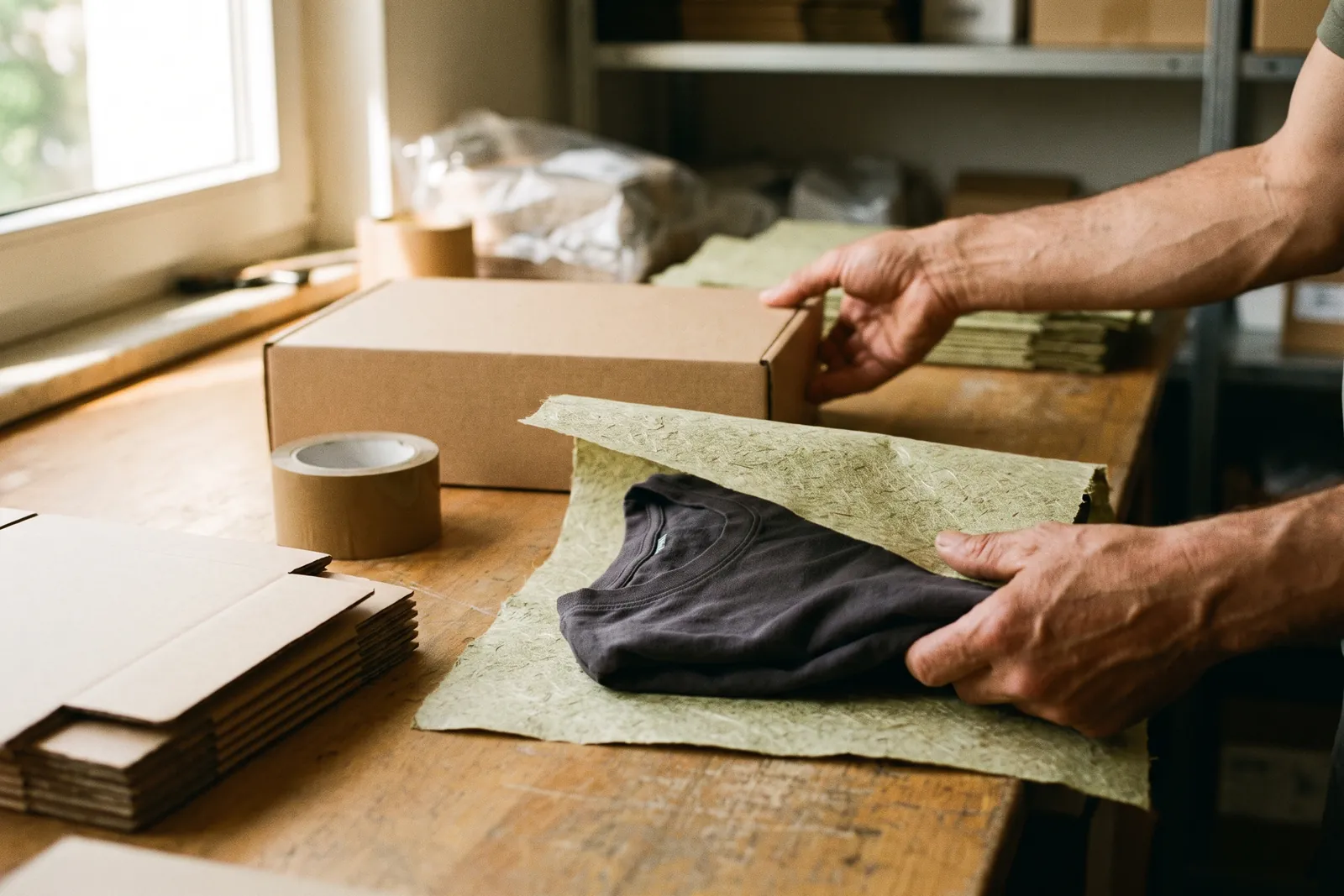
Packaging should be minimised where possible. When necessary, prefer materials like recycled cardboard or grass paper. We ship DHL parcels with GoGreen Plus. You can learn more about how we handle the operational aspects of warehousing and distribution in our overview of logistics and fulfilment services.
Implementing Your Merchandising Programme
Navigating material options, verifying certifications, and managing a complex supply chain requires specialised expertise. At UNICUM Merchandising, our focus is on creating and managing comprehensive, long-term merchandising programmes for businesses and universities. We handle everything from product selection and design to warehousing and international distribution through dedicated webshops.
Our service is designed for integrated solutions. For organisations looking for direct purchasing of smaller quantities (from 10 pieces) or who wish to manage the selection of specific printing or embroidery techniques for a one-off project, we recommend our partner platform at unicum-textildruck.de.
Ready to develop a merchandising concept that reflects your company's commitment to quality and diligence? Explore our full-service model to understand how we can support your goals, or contact us directly to start a conversation with our specialists.
Looking for full-service merchandising?
We handle your promotional product projects from A to Z – from a single source.
To Full-Service