

Guide
Textile Finishing: Screen Printing, Embroidery & Transfer Compared
Which finishing method suits which motif, material and quantity? The practical comparison for on-brand textiles.

The choice of textile finishing is a critical decision in any corporate merchandising programme. It directly influences brand perception, product longevity, and the overall budget for items like hoodies, polo shirts, and caps. Selecting the appropriate method—whether screen printing, embroidery, or a transfer process—is not merely a technical detail but a strategic choice that ensures the final product aligns perfectly with its intended purpose, from high-volume event giveaways to premium corporate workwear.
Screen Printing: The Standard for Volume and Vibrancy
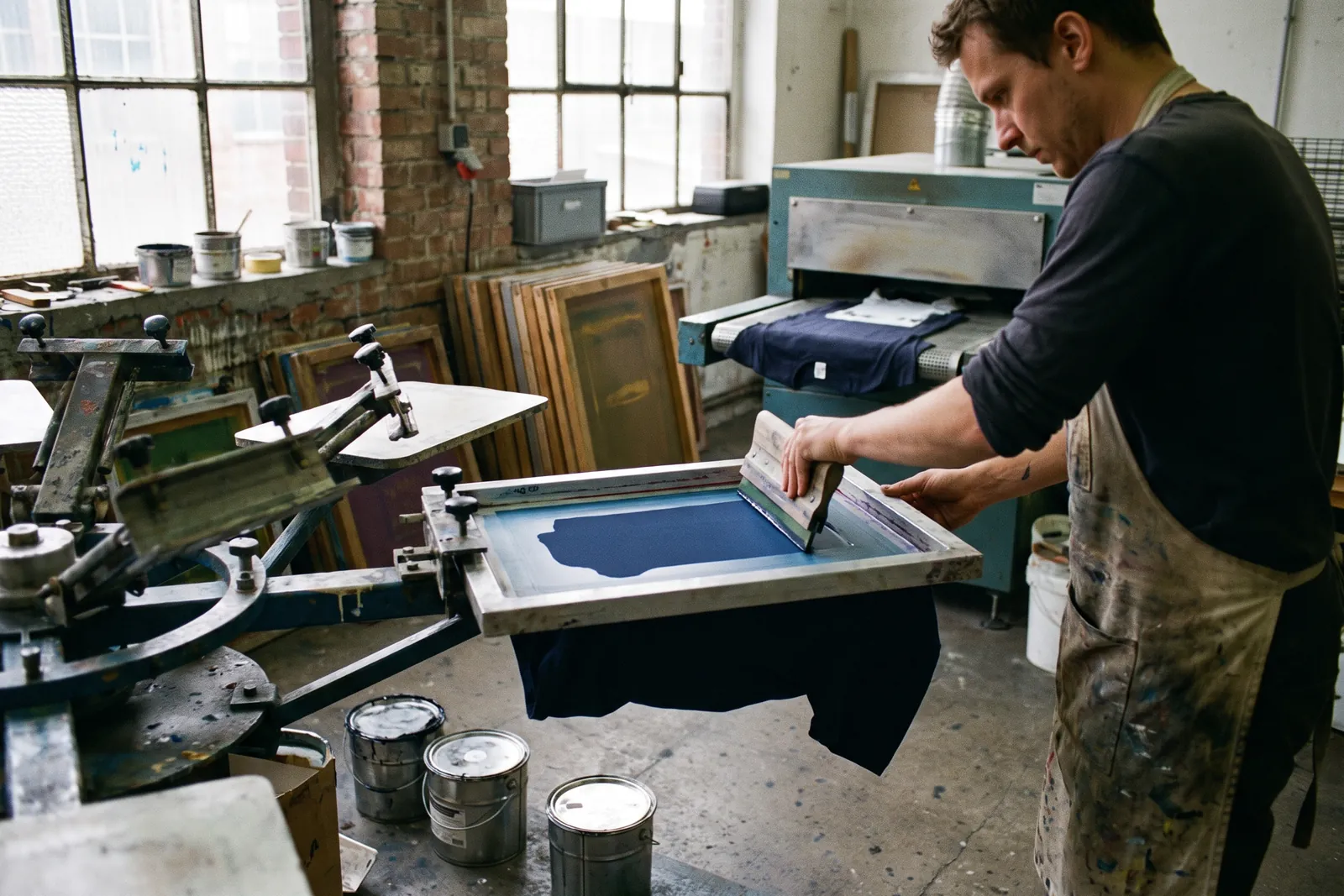
Screen printing is a classic and highly reliable method for applying designs to textiles. It involves pressing ink through a stencilled mesh screen onto the fabric. A separate screen is created for each colour in the design, making it an ideal process for logos and graphics with a limited number of solid colours.
The Process and Its Strengths
The core strength of screen printing lies in its efficiency at scale. While there is an initial setup cost for creating the screens, the cost per unit decreases significantly as the production volume increases. This makes it the most cost-effective option for large orders, such as merchandise for corporate events, university open days, or large-scale marketing campaigns. The inks used in screen printing are highly opaque and vibrant, creating a finished print that is both visually striking and exceptionally durable. When properly cured, a screen print becomes part of the fabric, able to withstand numerous wash cycles without fading or cracking.
- Cost-Effectiveness: From around 50 pieces, the cost per item drops significantly, as the fixed costs of making the screens are spread across many items.
- Durability: Produces a long-lasting, wash-resistant finish suitable for everyday wear.
- Colour Vibrancy: Achieves bright, opaque colours, even on dark-coloured textiles. Pantone colour matching is possible for precise brand consistency.
- Versatility: Works well on a wide range of fabrics, including cotton, polyester blends, and fleece.
Limitations and Considerations
The primary limitation of screen printing is its per-colour setup. Designs with many colours or photorealistic gradients become complex and expensive, as each colour requires its own screen. For this reason, it is not practical for small quantities or designs requiring a full-colour spectrum, such as photographs.
Embroidery: For a Premium and Durable Finish
Embroidery involves stitching a design directly into the fabric using high-speed, computer-controlled embroidery machines. It creates a textured, three-dimensional finish that conveys a sense of quality and permanence. This method is exceptionally popular for corporate branding on professional apparel.
The Process and Its Strengths
Before embroidery can begin, the artwork must be "digitised"—a process where the design is converted into a digital stitch map that the machine can read. The quality of the digitisation is crucial for a clean, professional result. Embroidery's main advantage is its unparalleled durability. The stitched threads are extremely resilient to washing and wear, often outlasting the garment itself. Its high-perceived value makes it the preferred choice for executive gifts, staff uniforms, and durable outerwear.
- Premium Appearance: The raised, textured finish provides a sophisticated and professional look.
- Exceptional Durability: Highly resistant to wear, washing, and fading, making it perfect for workwear, jackets, and caps.
- Fabric Versatility: Works exceptionally well on heavier fabrics like polo shirt piqué, fleece, heavy cotton, and outerwear materials.
Limitations and Considerations
Embroidery is not well-suited for very large designs, as the high stitch count can make the fabric heavy and stiff. It can also be challenging to reproduce very fine details, small text, or smooth colour gradients. The cost is generally calculated based on the stitch count, meaning larger and more complex designs are more expensive. Furthermore, embroidery is not recommended for very thin or lightweight fabrics, as the needlework can cause puckering.
Digital and Transfer Printing: For Maximum Detail and Flexibility
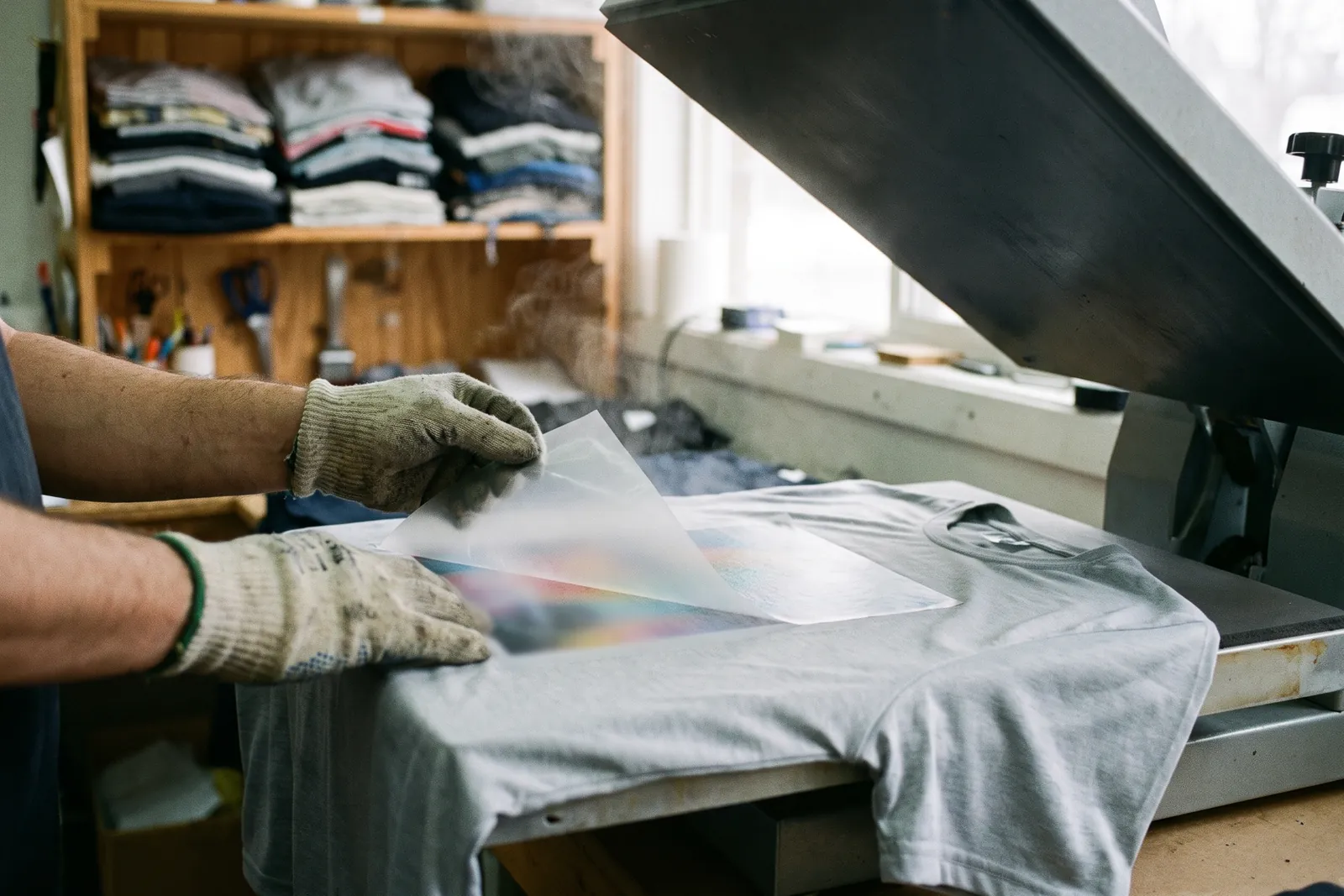
Digital and transfer printing methods are the solution for complex, multi-coloured, and photorealistic designs. These modern techniques allow for full-colour graphics to be applied to textiles without the need for colour separation or screens. The most common methods include Direct-to-Garment (DTG), where ink is printed directly onto the fabric, and various heat transfer processes (like Direct-to-Film or DTF), where the design is printed onto a special medium and then heat-pressed onto the item.
The Process and Its Strengths
The key advantage of these methods is the ability to reproduce intricate detail and an unlimited number of colours. There are no significant setup costs tied to the colour count, making digital and transfer printing economically viable for small runs, one-off items, and on-demand production. This flexibility is ideal for merchandising programmes that require personalisation or feature complex, full-colour artwork.
- Photorealistic Quality: Capable of reproducing photos, intricate illustrations, and complex colour gradients with high fidelity.
- No Minimum Order Quantity: Cost-effective for small batches and even single-item personalisation.
- Fast Turnaround for Small Runs: The minimal setup allows for quicker production on smaller orders.
Limitations and Considerations
While modern transfer technologies have improved significantly, the durability may not always match that of screen printing or embroidery, depending on the specific technique and fabric. The feel of the print on the garment can also be more noticeable. Colour vibrancy can vary, and achieving precise Pantone matches can be more challenging than with screen printing.
Choosing the Right Method for Your Merchandising Programme
As a full-service merchandising partner, we guide our clients in selecting the optimal finishing method based on project goals. The decision rests on a balance of quantity, design complexity, desired product quality, and budget.
- For large-volume orders with simple graphics (e.g., event t-shirts), screen printing offers the best balance of cost, durability, and vibrant colour.
- For premium corporate apparel and workwear (e.g., embroidered polo shirts, jackets), embroidery provides a durable, high-end finish that enhances brand value.
- For complex, multi-colour designs or small, personalised batches, digital and transfer printing offer unmatched flexibility and detail.
The choice of fabric is also a key factor. Our experts help you select from our range of textiles, including items made from GOTS-certified organic cotton or containing recycled polyester (rPET), to ensure compatibility with the chosen finishing technique. For a complete overview of our services, please see our main page on textile printing and embroidery.
Full-Service Programmes vs. Direct Purchase Orders
At UNICUM Merchandising, our focus is on creating comprehensive, full-service merchandising programmes. This includes developing webshop systems, managing warehousing and fulfilment, and curating product collections. Within this framework, we select the most appropriate finishing technique as part of a holistic strategy. For businesses seeking to place direct orders for specific quantities (from 10 pieces) and who wish to select the finishing technique themselves, our specialised partner shop, unicum-textildruck.de, is the dedicated platform for these services.
If you are unsure which method best suits your corporate merchandising needs or would like to discuss a complete programme, our team is here to provide expert guidance. Contact us today for a professional consultation.
Looking for full-service merchandising?
We handle your promotional product projects from A to Z – from a single source.
To Full-Service