

Guide
Full-Service Merchandising vs. In-House: A Decision Guide
Source it yourself or outsource? We compare effort, cost and risk – and show when a merchandising full-service really pays off.

Many companies begin by managing their merchandising in-house, handling everything from sourcing T-shirts to shipping welcome packages. This approach offers direct control but often conceals significant operational costs and resource drains. As an organisation grows, what starts as a manageable side task can quickly evolve into a complex logistical challenge that distracts from core business activities. The critical question for any growing business is not whether to use merchandising, but how to manage it effectively. Understanding the tipping point where a full-service model becomes more efficient and strategic is key to unlocking its true potential for brand building and employee engagement.
The In-House Merchandising Model: Apparent Control, Hidden Costs
Managing merchandising internally gives a company complete authority over every decision. For a startup ordering a single batch of 50 hoodies, this is often the most straightforward path. However, as the scale and complexity of these needs increase, the necessary internal resources can expand exponentially. The reality of the in-house model involves a long chain of responsibilities that fall on employees who may already have full-time roles in marketing, HR, or office management.
Core In-House Responsibilities
- Supplier Management: Researching, vetting, and negotiating with multiple vendors for different products (e.g., textiles, print goods, electronics). This creates numerous points of contact and administrative interfaces.
- Quality Assurance: Requesting and approving samples, ensuring colour consistency with corporate design guidelines, and performing quality checks on bulk deliveries.
- Inventory and Warehousing: Allocating physical space for stock, which could otherwise be used for business operations. This includes managing inventory levels, tracking stock, and dealing with the financial risk of overstock.
- Order Fulfilment: Manually picking, packing, and shipping individual orders to various locations, such as different offices, new employees working remotely, or event attendees.
- Customer Service and Returns: Handling inquiries about orders, managing shipping issues, and processing returns or exchanges.
- Financial Administration: Processing multiple supplier invoices, managing payments, and handling the billing or internal cost allocation for merchandise.
The most significant drawback is the hidden cost of employee time. When a marketing manager spends hours packing boxes or an HR specialist deals with a lost shipment, that is time not spent on strategic initiatives. These opportunity costs, combined with the physical costs of storage and the risk of obsolete inventory, can make the in-house model far more expensive than it first appears.

The Full-Service Merchandising Model: A Strategic Partnership
Switching to a full-service merchandising provider outsources the entire operational workload to a specialised partner. This partner acts as a single point of contact, managing the complete process from initial concept to final delivery. This is not merely a procurement service; it is an integrated solution designed to ensure efficiency, brand consistency, and scalability.
Key Components of a Full-Service Solution
- Product Sourcing and Development: A provider uses its established network to source high-quality products that align with a company's brand and values. This can include items made from materials like GOTS-certified organic cotton or recycled polyester (rPET), as well as custom product development.
- Centralised B2B Webshop: A dedicated, password-protected online portal allows authorised employees or partners to order pre-approved merchandise directly. This automates the ordering process and ensures brand control.
- Warehousing and Inventory Management: The partner stores all merchandise in a professional logistics centre, manages stock levels, and provides regular reporting, eliminating the need for in-house storage.
- Pick, Pack, and Ship: All orders placed through the webshop are professionally picked, packed, and shipped to any destination, whether it's a single office or hundreds of individual home addresses across Europe.
- Reporting and Analytics: Clients receive transparent data on stock levels, order volumes, and popular items, enabling informed decisions for future merchandising strategies.
Decision Guide: When Does a Switch Make Sense?
The transition from in-house to a full-service model is typically triggered by specific growth-related pain points. If your organisation identifies with several of the following scenarios, it is a strong indicator that a professional merchandising programme would deliver significant value.
1. Your Operational Effort Is Becoming Unsustainable
Are your employees spending more than a few hours each week on merchandising tasks? When logistical duties start interfering with core job functions, the "hidden costs" are becoming real costs. A full-service partner frees up your team to focus on their primary responsibilities.
2. You Need to Supply Multiple Locations or Remote Employees
Shipping from a single office to numerous national or international locations is logistically complex and costly. A centralised partner streamlines this process, ensuring consistent delivery experiences and quality control, which is vital for programmes like new employee onboarding or sales team outfitting.
3. Brand Consistency Is a Strategic Priority
If different departments or regional offices are sourcing their own merchandise, it can lead to inconsistent quality, colours, and logo applications, diluting your corporate identity. A central programme guarantees that every single item adheres to strict brand guidelines.
4. You Require Scalability and Flexibility
Your needs may fluctuate, from sending out a few dozen welcome kits one month to supplying a major corporate event the next. A full-service provider can scale operations up or down as needed without requiring you to invest in additional storage space or temporary staff.
A Phased Approach: Modular Outsourcing
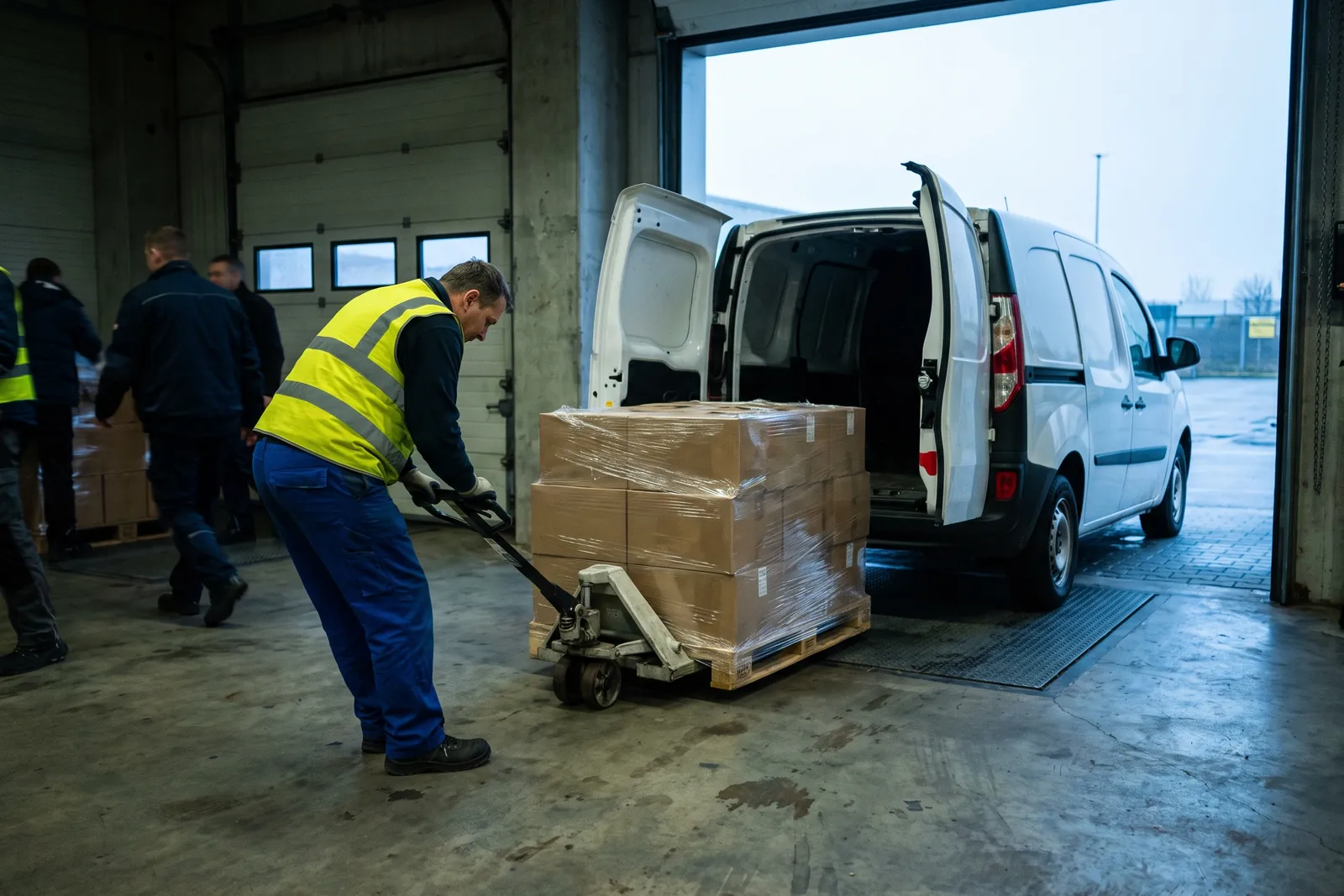
The shift to a full-service model does not have to be an all-or-nothing decision. Many companies choose a modular approach to test the benefits and manage the transition smoothly. For instance, an organisation might continue to source its own products but decide to outsource the warehousing and distribution. This hybrid solution can be an effective first step, immediately solving the most pressing logistical challenges. By starting with individual service blocks such as professional logistics and fulfilment, you can alleviate storage and shipping burdens while retaining control over product selection.
Programme Management vs. Direct Purchase: A Crucial Distinction
It is important to differentiate between an ongoing merchandising programme and a simple one-time purchase. A comprehensive full-service merchandising programme is designed for continuous, integrated needs. This includes systems for employee onboarding, corporate wear, partner programmes, or a permanent B2B shop where departments can order supplies on demand. This is the core focus of UNICUM Merchandising.
In contrast, a direct purchase is typically for a specific, isolated need, such as ordering 100 T-shirts for a trade show or 25 embroidered jackets for a team event. For these types of direct-purchase inquiries, especially for smaller quantities starting from 10 pieces or when the choice of a specific printing or embroidery technique is the primary concern, our partner company is the specialist. Please direct such requests to unicum-textildruck.de for a direct quote and processing.
Choosing the right model depends entirely on your organisation's current scale, strategic goals, and internal resources. By evaluating your processes against these criteria, you can make an informed decision that supports your brand and streamlines your operations.
Are you unsure which model is the right fit for your company's needs? We can analyse your current processes and requirements to provide a neutral, no-obligation recommendation. Request a free consultation with our experts to explore your options.
Looking for full-service merchandising?
We handle your promotional product projects from A to Z – from a single source.
To Full-Service