

Guide
Promotional Product Sourcing: Private Labels & Custom Production
How custom promotional products and private labels are created – from the initial idea and sampling to reliable procurement.

Effective promotional product sourcing goes far beyond simply buying standard products from a catalogue. It is a strategic process that, when implemented correctly, strengthens brand identity and leaves a lasting impression on target audiences. Custom-made items and the development of private labels, in particular, offer companies and universities the opportunity to stand out from the competition. This guide highlights the crucial steps and aspects of professional product sourcing – from the initial concept to final delivery.
Why Standard Promotional Products Aren't Always Enough
Catalogue items are readily available and suitable for many purposes. However, they have their limitations when it comes to specific brand messages, high quality standards or a unique design. A promotional product that is perfectly tailored to the corporate identity conveys values and attention to detail. A custom-made item can be precisely adapted to the brand in terms of shape, colour, material and function. Instead of just printing a logo on an existing product, the product itself becomes part of the brand story.

The Custom Production Process: From Idea to Product
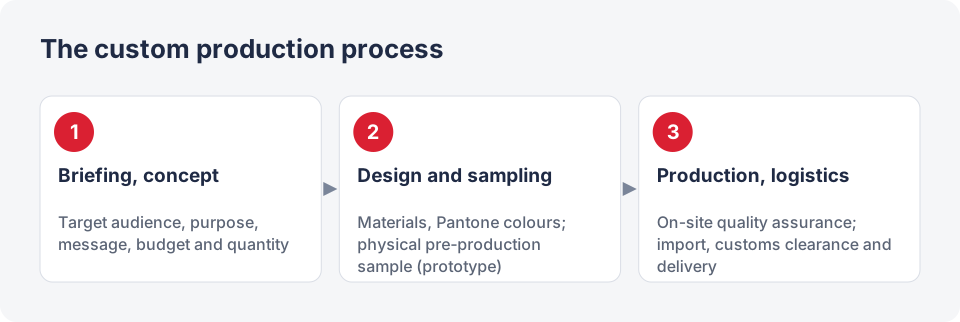
Developing a custom promotional product is a multi-stage process that requires close collaboration between the client and the service provider. A professional Product Development & Sourcing service ensures that all steps are monitored and transparent.
1. Briefing and Concept Development
The process always begins with a clear definition of the objectives. Key questions include:
- Target audience: Who will receive the item (customers, employees, students)?
- Purpose: Will it be used as a giveaway at a trade fair, a high-quality corporate gift, or part of an employee welcome box?
- Message: What brand values should the product convey (e.g. innovation, reliability, a focus on specific materials)?
- Budget and quantity: What is the cost per item and what is the planned production run?
Based on this brief, initial ideas and concepts are developed that are both creative and technically feasible to produce.
2. Design, Material Selection and Sampling
In the next step, the concept is turned into a concrete design. This is where materials, colours (precisely matched to Pantone specifications) and finishing details are defined. Specific material properties are also playing an increasingly important role, such as the use of organic cotton, recycled polyester (rPET) or certified materials. Sampling is a crucial milestone. A physical pre-production sample (prototype) ensures that the feel, quality and appearance meet expectations before mass production begins.
3. Production, Quality Assurance and Logistics
Once the sample is approved, production begins with carefully selected and audited partners. Continuous on-site quality assurance is essential to prevent deviations and ensure compliance with social and quality standards. The process concludes with organising the logistics, including import, customs clearance and delivery.
Private Label vs. Custom Production: A Strategic Decision
While a custom-made item is often developed for a specific project or campaign, creating a private label (own brand) goes one step further. This involves creating an entire collection of merchandise under your own brand name. This is particularly relevant for companies and universities that want to sell their products permanently through their own shop. A private label allows for maximum control over design, quality and pricing, and is a key component of a professional full-service promotional products solution, which also includes warehousing and shipping.
Quality and Compliance in the Supply Chain
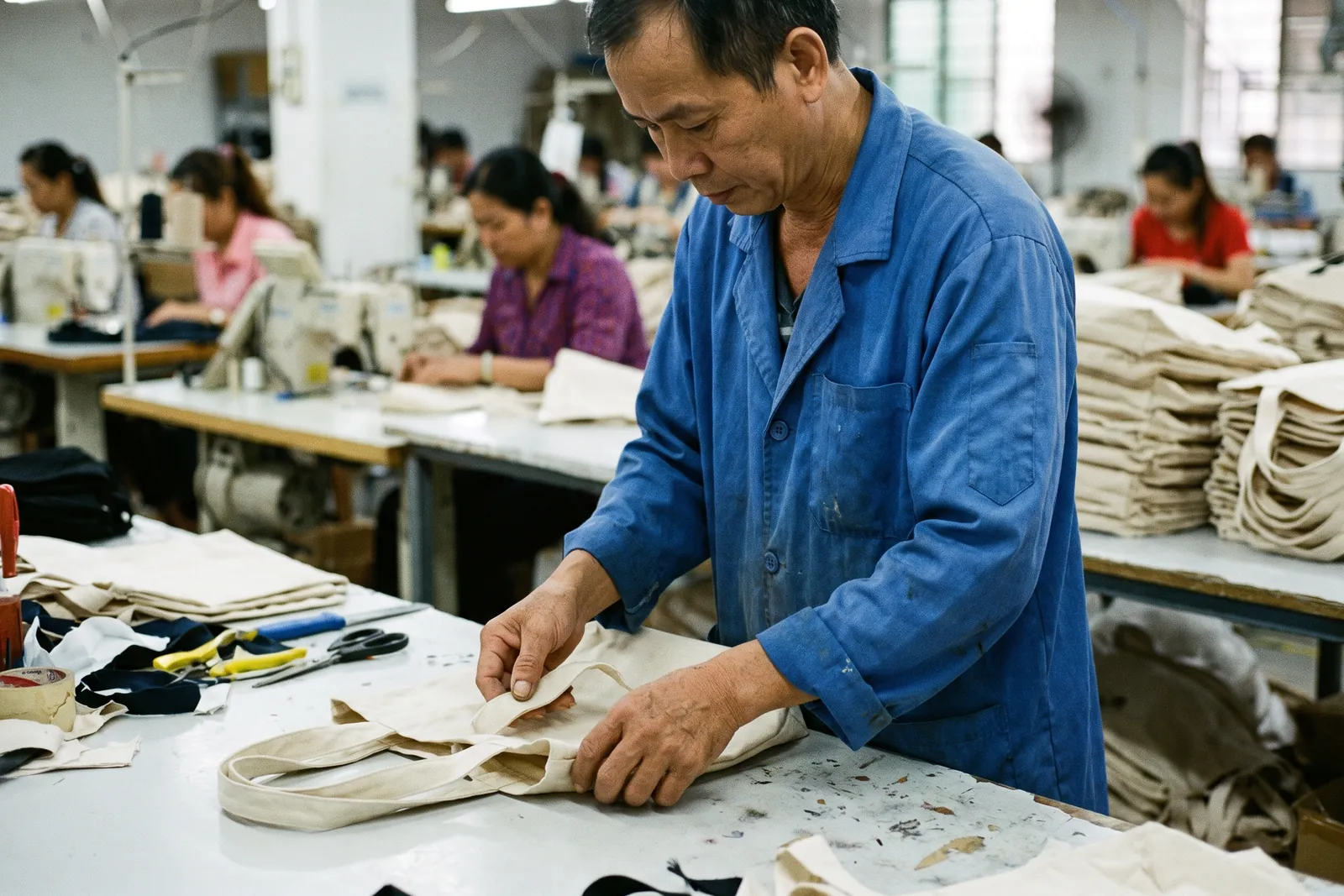
Professional promotional product sourcing includes responsibility for the entire supply chain. This means that production facilities are selected not only based on price but also on whether they are, for example, GOTS-certified or members of the Fair Wear Foundation. Compliance with standards such as BSCI (Business Social Compliance Initiative) or product safety regulations (e.g. REACH, CE marking) is fundamental. For textiles, certifications like GOTS (Global Organic Textile Standard) or the Fair Wear Foundation provide concrete and transparent guidance on production conditions. The subsequent decoration of such textiles should also be carried out under quality-assured conditions.
Important note: The full-service programmes for custom-made items and private labels described here are designed for comprehensive merchandising concepts. If, however, you would like to have standard textiles printed or embroidered directly in smaller quantities (from 10 units) and are looking for a selection of different printing methods, you will find the right service at unicum-textildruck.de.
Developing your own promotional products is an investment in your brand's strength. With an experienced partner by your side, you can ensure that your project is implemented professionally, transparently and successfully from concept to delivery. This creates products that not only advertise but also authentically represent your brand.
Looking for full-service merchandising?
We handle your promotional product projects from A to Z – from a single source.
To Full-Service