

Guide
School Clothing – Pros and Cons: Arguments for Parents and Schools
More community or less individuality? The key arguments for and against school clothing, presented objectively.

The debate about standardised clothing in schools is a recurring topic in Germany. While proponents emphasise the strengthening of community spirit and the reduction of social pressure, critics see it as a restriction of individual freedom. This guide provides a balanced look at the most important pros and cons of school clothing to offer parents, teachers, and school leaders a solid basis for making an informed decision, and clarifies the difference between a strict uniform policy and a voluntary clothing concept.
Arguments in Favour: The Case for Standardised School Clothing
The introduction of school clothing is often associated with positive effects on social interaction and daily school life. The main arguments from proponents can be divided into three areas.
Strengthening Community Spirit
A shared appearance can significantly promote a sense of belonging, the so-called 'we-feeling', among the student body. Visual identification with one's own school is strengthened, which can have a positive impact on school pride and internal culture. Outsiders perceive the school as a cohesive unit, which is particularly advantageous during events or excursions.
Reducing Social Pressure and Brand Competition
One of the strongest arguments is the easing of competition over expensive designer clothing. When everyone wears similar clothes, status symbols fade into the background. This can reduce bullying related to clothing and lessen the financial pressure on families. Furthermore, it eliminates the daily stress for pupils of choosing what to wear, allowing them to focus more on the school day ahead in the morning.
Practical Advantages in Daily School Life
Standardised clothing makes it easier to identify groups of pupils on trips, thus increasing safety. It ensures an orderly and professional appearance at official school events. In addition, the collections are often designed for daily school life: the textiles are typically durable, easy to care for, and designed for movement.

Arguments Against: Concerns About School Clothing
Despite the potential benefits, there are significant reasons that argue against the mandatory introduction of school clothing. These concerns primarily relate to personal rights and financial aspects.
Restriction of Individual Expression
The most important counter-argument is the infringement on personal freedom. Clothing is a key form of expressing one's own identity and creativity. A mandatory dress code restricts this fundamental right to the free development of personality (Art. 2 Para. 1 of the German Basic Law). For this reason, a uniform policy unilaterally imposed by school management is not legally enforceable in Germany. Furthermore, the competition for recognition often just shifts to other areas such as shoes, accessories, or smartphones.
Costs and Financial Burden
Even if designer clothing is no longer a factor, the purchase of school clothing represents a financial hurdle for many families, especially when several children need to be kitted out. Multiple sets are required to allow for daily changes and laundry. Without social support mechanisms or subsidy programmes, this can create a new form of financial burden.
The Pragmatic Middle Ground: Voluntary School Clothing Instead of a Uniform
In the German school landscape, a pragmatic compromise has become established: voluntary school clothing. Instead of a strict uniform policy, a collection of clothing items (e.g., T-shirts, polo shirts, hoodies, jackets) featuring the school logo is offered, which can be worn voluntarily. This model combines the advantages of both sides:
- Strengthening Identification: Pupils can show their affiliation with the school if they wish.
- Preserving Individuality: On days without special occasions, the freedom to choose one's own clothes remains unrestricted.
- High Acceptance: As wearing it is voluntary, there is no feeling of compulsion.
This approach promotes a sense of community without infringing on the personal rights of the pupils.
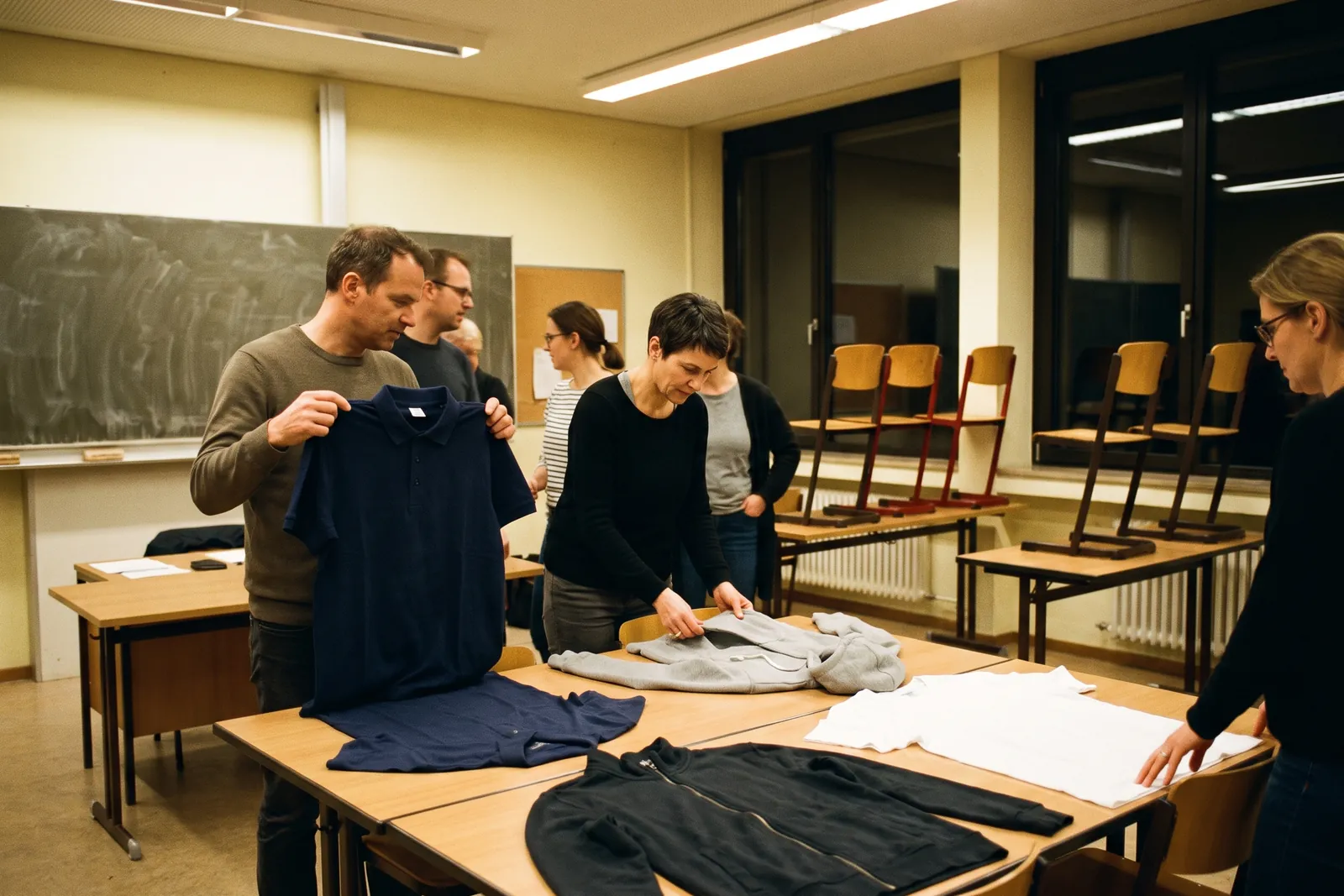
What to Consider During Selection and Introduction
The success of a school clothing project depends heavily on proper planning and implementation. A transparent process that involves all stakeholders is crucial.
- Participation: Involve pupils, parents, and teachers in the decision-making and design process from the very beginning. A jointly developed guide to introducing school clothing can help with this.
- Quality and Material: Pay attention to durable, comfortable, and easy-care materials. Options such as GOTS-certified organic cotton or textiles made from recycled polyester (rPET) are available.
- Design: The collection should be modern and appealing so that it is popular with the student body.
- Logistics: Procurement and distribution must be organised simply and reliably, for example, through a dedicated small online shop for the school.
The approach to this topic varies greatly, as a look at the practice of school clothing worldwide shows. The voluntary model is the best fit for the German educational landscape.
Distinction: School Clothing Programme vs. Textile Printing for Small Quantities
It is important to distinguish between a comprehensive school clothing programme and a one-off order of textiles. While a programme involves a permanent collection, logistics, and often a dedicated ordering shop, leavers' hoodies or T-shirts for a school trip are a one-time production. For direct printing or embroidery of textiles in smaller batches of 10 or more, a specialised provider like unicum-textildruck.de is recommended.
The decision for or against school clothing is complex and should be carefully weighed. A voluntary concept based on acceptance and identification offers the best way for many schools to reap the benefits without having to accept the disadvantages of a compulsory policy. For educational institutions wishing to implement such a programme professionally and in partnership, we offer comprehensive and proven solutions for schools & nurseries.
Looking for full-service merchandising?
We handle your promotional product projects from A to Z – from a single source.
To Full-Service